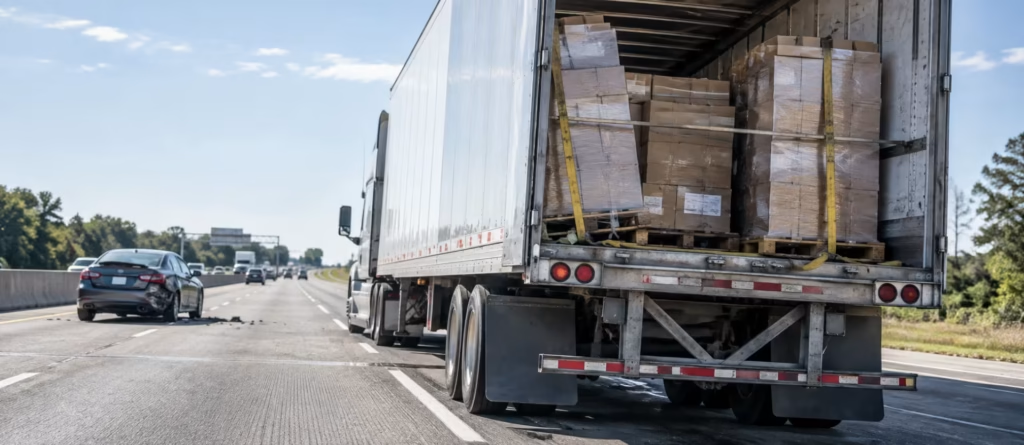
A serious 18-wheeler crash can leave behind far more questions than a standard car accident. Determining what happened may require examining the truck, its driver, the trucking company, electronic data, maintenance history, cargo, road conditions, and the actions of other drivers.
A thorough truck accident investigation is often necessary to connect these pieces and determine how a collision occurred and who may be responsible. For an injured person, this process can be especially important because some of the most valuable evidence may be held by the trucking company or may disappear if it is not preserved promptly.
Understanding how truck accident lawyers investigate an 18-wheeler crash can help victims understand what happens behind the scenes when an attorney begins building a truck accident claim.
Why Truck Accident Investigations Are Complicated?
An 18-wheeler is a commercial vehicle subject to extensive safety requirements. Unlike a typical passenger-vehicle accident, a commercial truck collision may involve multiple potential sources of evidence and several parties whose conduct needs to be examined.
An 18 wheeler accident investigation may look at:
- The truck driver’s actions
- The driver’s hours and rest periods
- Vehicle speed and braking
- Truck maintenance and inspections
- Electronic vehicle data
- ELD records
- Cargo loading
- Trucking company policies
- Driver training and qualifications
- Dashcam and surveillance footage
- Witness accounts
- Road and weather conditions
- The actions of other motorists
This is why a truck accident investigation process can take considerably more work than simply reviewing a police report.
How Are Truck Accidents Investigated?
The answer to this depends on the circumstances of the collision. A lawyer tyThe answer to this depends on the circumstances of the collision. A lawyer typically starts by identifying what evidence exists, where it is located, and which parties may control it.pically starts by identifying what evidence exists, where it is located, and which parties may control it.
A truck accident lawyer investigation may involve:
- Reviewing the accident report and initial evidence
- Examining the crash scene
- Identifying and interviewing witnesses
- Preserving relevant evidence
- Obtaining electronic truck data
- Reviewing driver records
- Examining maintenance and inspection documents
- Investigating the trucking company’s conduct
- Reviewing video and GPS information
- Consulting accident reconstruction professionals
- Identifying potentially responsible parties
- Connecting the evidence to the victim’s injuries and damages
The objective is not simply to determine what happened. A truck accident liability investigation also seeks to establish why the collision happened and whether another party’s negligence contributed to it.
Investigating the Crash Scene
A truck accident scene investigation can provide important evidence about how the collision occurred. An attorney or accident reconstruction professional may examine:
- Skid marks
- Tire marks
- Debris patterns
- Vehicle positions
- Point of impact
- Vehicle damage
- Road conditions
- Traffic signs and signals
- Lane markings
- Visibility
- Weather conditions
Photographs and measurements can be particularly important because the scene may change quickly. Vehicles are moved, debris is cleared, road conditions change, and physical evidence may no longer be available later.
Gathering Truck Accident Evidence
A major part of any investigation involves identifying and preserving truck accident evidence.
What Evidence Is Available?
The evidence in truck accident cases can come from many different sources, including:
- Police reports
- Crash-scene photographs
- Medical records
- Witness statements
- Truck electronic data
- ELD records
- Driver logs
- Maintenance records
- Inspection records
- GPS information
- Dashcam footage
- Surveillance video
- Cargo records
- Dispatch records
- Repair documents
- Physical truck components
Some evidence after truck accident may be controlled by the trucking company, while other evidence may come from independent witnesses, nearby businesses, government agencies, or the vehicles involved.
Truck Accident Evidence Checklist
A truck accident evidence checklist may include:
- Accident photographs
- Police reports
- Witness contact information
- Medical documentation
- Truck black box data
- ELD records
- Driver logs
- Maintenance records
- Inspection reports
- Dashcam footage
- Surveillance video
- GPS data
- Driver qualification records
- Trucking company records
- Cargo and loading records
- Accident reconstruction evidence
Not every case requires every category. The appropriate evidence depends on how the crash occurred and what issues are disputed.
Examining Truck Black Box Data
Electronic systems inside commercial trucks can provide valuable information about what happened before a collision.
Truck accident black box data may provide information about vehicle operation, depending on the truck’s make, model, and electronic systems.
Similarly, this evidence may help investigators evaluate issues such as speed, braking, or other vehicle activity surrounding the collision. In some cases, 18 wheeler black box data can become an important part of reconstructing the events immediately before a crash.
The term “black box” is commonly used to describe electronic information stored by a vehicle, but different trucks can have different systems and capabilities. The available data must therefore be identified and interpreted based on the specific vehicle involved.
Examining the Truck’s EDR and ECM Data
A truck may contain multiple electronic systems that record or transmit information about its operation.
A truck event data recorder may contain information relevant to the collision, depending on the particular system. Investigators may also examine truck ECM data accident evidence from the engine control module.
Similarly, truck EDR data accident information may help establish details about vehicle operation around the time of the crash. This information can be particularly useful when it can be compared with physical evidence, witness accounts, photographs, video, and other records.
Reviewing ELD Records
Electronic logging devices (ELD) can be especially important when driver fatigue or hours-of-service violations are suspected.
ELD records in truck accident evidence may help establish the driver’s recorded duty status and driving activity before the collision.
An electronic logging device truck accident investigation may examine:
- When the driver began working
- Driving periods
- Rest periods
- On-duty periods
- Off-duty periods
- Changes in duty status
- The driver’s overall schedule
Federal regulations generally require covered motor carriers to retain records of duty status and supporting documents for six months.
ELD information should also be compared with other evidence rather than viewed in isolation. Fuel receipts, GPS data, delivery records, dispatch communications, and witness accounts may help establish whether the recorded timeline is accurate.
Investigating Driver Fatigue and Hours of Service
Driver fatigue can be a significant issue in an 18-wheeler collision. A truck driver’s fatigue investigation may examine:
- Hours of service
- ELD records
- Logbook
- Rest periods
- Work schedule
- Trip length
- Delivery schedule
- Dispatch instructions
- Driving history
Reviewing the Truck Driver’s Logbook
A truck driver logbook accident investigation may compare the driver’s recorded hours with other available information.
For example, investigators may compare logbook entries against GPS records, fuel purchases, toll records, delivery documents, or ELD information.
A discrepancy does not automatically establish that the driver caused the crash, but it may raise questions that require further investigation.
Reviewing Truck Maintenance Records
Mechanical problems can also contribute to serious truck collisions. A review of truck maintenance records as accident evidence may reveal:
- Previous brake problems
- Tire defects
- Steering issues
- Suspension problems
- Recurring mechanical issues
- Missed repairs
- Repair history
- Replacement of critical components
- Previously documented safety concerns
A truck that was not properly maintained may present serious risks to everyone sharing the road.
Examining Truck Inspection Records
Truck inspection records for accident evidence may help determine whether a dangerous condition was identified before the crash.
An investigation may examine:
- Driver vehicle inspection reports
- Periodic inspection records
- Repair orders
- Defect reports
- Maintenance invoices
- Service records
- Parts replacement records
If a serious defect was previously identified but not corrected, that information could become relevant to the investigation.
Investigating the Trucking Company
The trucking company may also have extensive records concerning the driver and vehicle. Trucking company accident records may include:
- Internal accident reports
- Driver records
- Maintenance records
- Inspection records
- Dispatch communications
- GPS information
- Training documents
- Safety records
- Delivery records
- Company policies
A trucking company negligence investigation may examine whether the company properly maintained the vehicle, followed applicable safety requirements, hired and trained qualified drivers, or responded appropriately to known safety concerns.
The investigation may also consider whether the company’s policies, scheduling practices, or instructions placed unreasonable pressure on the driver.
Reviewing the Driver Qualification File
The driver’s qualifications can become relevant depending on the circumstances.
A truck driver qualification file accident investigation may examine records concerning the driver’s qualifications, training, driving history, medical certification, and other information maintained by the carrier.
The purpose is not to assume that a driver’s past automatically proves negligence. Instead, the records may help determine whether the driver was properly qualified and whether the trucking company followed applicable requirements.
Investigating Dashcam Footage
Video can provide an independent account of what happened before a collision. Truck accident dashcam footage may show:
- Vehicle speed
- Lane position
- Traffic conditions
- Lane changes
- Driver behavior
- Road hazards
- Events immediately before impact
Dashcam footage may come from the truck itself, another vehicle, or a nearby source.
Looking for Surveillance Video
A serious crash may also have been captured by nearby cameras. Truck accident surveillance video can potentially come from:
- Businesses
- Gas stations
- Parking lots
- Traffic cameras
- Residential properties
- Nearby vehicles
Video systems often overwrite older footage. Identifying potential sources quickly can therefore be important when investigating a crash.
Examining Truck GPS Data
Truck GPS data accident evidence may help establish where the truck traveled and how it moved before the collision. GPS information can be compared with:
- ELD records
- Driver logs
- Delivery records
- Fuel receipts
- Dispatch records
- Toll records
- Witness statements
This comparison can help investigators determine whether the reported timeline and route are consistent with other evidence.
Gathering Witness Statements
Witnesses can provide information that may not be available through electronic systems. Truck accident witness statements may help establish:
- How the truck was being driven
- Whether the truck was speeding
- Whether it moved between lanes
- Whether the driver appeared distracted
- Whether the truck was braking
- What happened immediately before impact
Witness accounts are most useful when evaluated alongside physical and electronic evidence.
Conducting Truck Accident Reconstruction
Some crashes require technical analysis to determine how the collision occurred. A truck accident reconstruction may examine:
- Vehicle speeds
- Braking
- Skid marks
- Impact points
- Vehicle movement
- Collision angles
- Damage patterns
- Road conditions
- Electronic data
A truck accident reconstruction expert can use this information to develop an analysis of the collision sequence.
In more complex cases, commercial vehicle accident reconstruction may account for the truck’s size, weight, braking characteristics, trailer movement, and other factors that differ from passenger vehicles.
Preserving Evidence After a Truck Accident
Evidence can disappear, be overwritten, damaged, or destroyed if it is not preserved.
A truck accident preservation letter may be sent to a trucking company or another party that possesses potentially relevant evidence.
The request may cover:
- Black box data
- ELD records
- ECM and EDR information
- Maintenance records
- Inspection records
- Driver records
- Dashcam footage
- Surveillance footage
- GPS data
- Communications
- Physical truck components
A preservation request does not automatically guarantee that the evidence will be produced, but it can formally notify an evidence holder that certain information may be relevant to a potential claim.
How to Prove Fault in a Truck Accident
Understanding how to prove fault in a truck accident requires more than identifying which vehicle struck the other.
An investigation may need to establish:
- What the driver did
- What the driver should have done
- Whether the driver violated a safety requirement
- Whether the truck had a mechanical problem
- Whether the vehicle was properly maintained
- Whether the trucking company contributed to the collision
- Whether cargo was properly loaded
- Whether another party contributed to the crash
The evidence must ultimately connect the negligent conduct to the collision and the resulting injuries or damages.
Determining Truck Accident Liability
A truck accident liability investigation may identify several potentially responsible parties.
Depending on the circumstances, these may include:
- The truck driver
- The trucking company
- The truck owner
- A leasing company
- A maintenance provider
- A cargo-loading company
- A manufacturer
- Another motorist
- Other parties whose conduct contributed to the collision
Not every party connected to a truck will necessarily be legally responsible. Liability depends on the evidence and the applicable law.
How a Truck Accident Lawyer Investigates an 18-Wheeler Crash
So, how truck accident lawyers investigate these crashes in practice? A truck accident investigation lawyer may take a systematic approach.
Review the Initial Information
The investigation may begin with the police report, photographs, medical records, witness information, and the basic circumstances of the collision.
Identify the Trucking Parties
The attorney may determine who owned, operated, leased, maintained, loaded, or otherwise controlled the truck.
Preserve Potential Evidence
A preservation request may be used to identify and preserve electronic records, video, documents, and physical evidence.
Obtain Electronic Data
Available ELD, ECM, EDR, GPS, telematics, and other electronic information may be obtained and analyzed.
Examine Driver Records
The investigation may include driver logs, hours-of-service records, qualification documents, training information, and other relevant records.
Review Maintenance and Inspection History
Maintenance records may reveal whether the truck had known defects or whether required repairs and inspections were performed.
Locate Video Evidence
Dashcam, surveillance, traffic-camera, and other video sources may be identified and preserved.
Interview Witnesses
Witnesses can provide additional information about the truck’s actions and the events leading up to the collision.
Consult Reconstruction Professionals
When necessary, an accident reconstruction professional can analyze physical and electronic evidence to help determine how the crash occurred.
Identify Potential Liability
The final step is to evaluate the evidence and determine which parties may have contributed to the crash and resulting injuries.
How The Wright Law Office Can Help
A commercial truck collision can involve evidence controlled by several different parties. The Wright Law Office can investigate the circumstances of a serious truck crash by identifying relevant evidence, preserving records, examining available electronic information, and evaluating potential sources of liability.
Freya Wright, a qualified 18-wheeler truck accident lawyer can review the circumstances surrounding an 18-wheeler collision and investigate whether factors such as driver negligence, fatigue, distracted driving, improper maintenance, defective equipment, trucking company negligence, or another party’s conduct contributed to the crash.
Depending on the circumstances, the investigation may involve obtaining relevant records, reviewing electronic data, examining maintenance and inspection history, evaluating video and witness evidence, and working with qualified professionals when accident reconstruction or other technical analysis is necessary.
Conclusion
Truck accident investigations can be complicated because the evidence may extend far beyond the crash scene. Electronic systems, driver records, maintenance documents, company records, video footage, witness statements, and physical evidence can all contribute to understanding how an 18-wheeler collision occurred.
A thorough 18 wheeler crash investigation can help connect these different sources of information and determine whether driver negligence, trucking company negligence, a mechanical problem, improper loading, or another factor contributed to the collision.