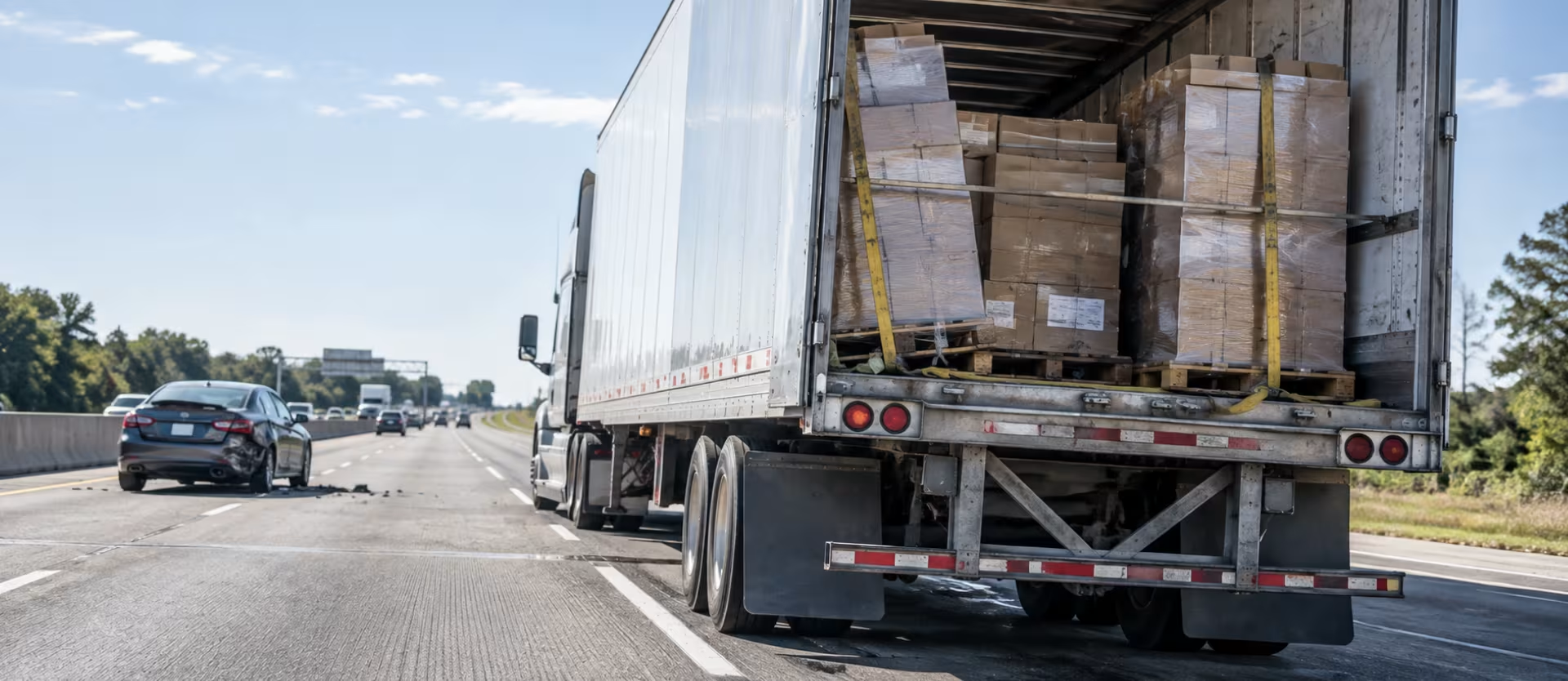
A commercial truck can weigh tens of thousands of pounds even before cargo is added. When a truck is overloaded, has cargo distributed incorrectly, or has materials that are not properly secured, the added risk can affect how the vehicle accelerates, brakes, steers, and handles turns.
When something goes wrong, determining responsibility is not always as simple as blaming the truck driver. In case of an overloaded truck accident, several parties could be involved, including the driver, trucking company, shipper, freight broker, or the company responsible for loading the cargo.
Understanding who is liable for an overloaded truck accident requires looking at how the truck was loaded, who controlled the cargo, whether weight limits were exceeded, what safety procedures were followed, and what caused the crash.
What Is an Overloaded Truck Accident?
An overloaded truck accident occurs when a commercial truck is carrying more weight than it is legally or safely permitted to carry. Weight limits can depend on factors such as the vehicle, axle configuration, roadway restrictions, and applicable federal or state requirements.
An overweight truck accident may occur when a truck exceeds a permitted weight limit, but determining whether the vehicle was legally overweight requires evidence rather than assumptions based solely on the severity of the crash.
Weight records, scale tickets, inspection reports, shipping documents, and other records may help establish how much the truck was carrying.
Why Overloaded and Improperly Loaded Trucks Are Dangerous?
Commercial trucks are designed to operate within specific weight and loading limits. Cargo must also be distributed and secured in a way that keeps the vehicle stable during normal driving conditions. An overloaded or improperly loaded truck can create several hazards, including:
- Longer stopping distances
- Reduced braking performance
- Difficulty steering or controlling the vehicle
- Increased risk of tire or mechanical failure
- Greater risk of rollovers
- Cargo shifting during transit
- Cargo falling or spilling onto the roadway
- Increased risk of jackknifing or loss of control
- Greater impact forces during a collision
In some cases, a truck accident caused by overloaded cargo occurs because the total weight exceeds the truck’s permitted capacity. In others, the truck may be within its overall weight limit but still be dangerously loaded because the cargo is concentrated in the wrong area or was not adequately secured.
Who Is Liable for an Overloaded Truck Accident?
There may not be one answer to who is responsible for an overloaded truck accident. Liability depends on the facts surrounding the crash and the responsibilities of each party involved in transporting and loading the freight. Potentially responsible parties may include:
- The truck driver
- The trucking company
- The shipper
- A cargo loading company
- A freight or logistics company
- A maintenance provider in certain circumstances
- Other parties whose negligence contributed to the crash
An investigation can help determine which party had responsibility for the truck’s weight, cargo distribution, or securement.
Truck Driver Liability
A driver may have responsibility when they knowingly operate an overloaded vehicle, fail to inspect the load, continue driving after recognizing a dangerous loading problem, or fail to follow applicable safety requirements.
The issue of truck driver liability in overloaded truck cases can depend on what the driver knew or reasonably should have known about the truck’s condition.
Drivers may also have responsibilities relating to cargo inspections during a trip. If cargo shifts or becomes unsecured and the driver fails to respond appropriately, that conduct may become relevant when determining truck accident liability. However, a driver is not automatically responsible simply because they were behind the wheel. The cargo may have been loaded by another party without the driver’s involvement or knowledge.
Trucking Company Liability
The trucking company may face liability when its own negligence contributed to the crash.
For example, trucking company liability in overloaded truck cases may involve situations where a company:
- Pressured a driver to carry an unsafe load
- Failed to follow applicable loading procedures
- Failed to properly inspect equipment
- Allowed a vehicle to operate despite known safety problems
- Failed to train or supervise employees appropriately
- Had employees participate in improper loading
- Ignored known cargo or weight concerns
Whether the company is legally responsible depends on the relationship between the company and the people involved, as well as the specific facts of the accident.
Shipper Liability
The shipper may have an important role in determining how freight is packaged, weighed, distributed, and prepared for transportation.
A shipper could potentially be responsible when it provides cargo that is improperly documented, exceeds applicable weight restrictions, or is loaded in a manner that creates an unreasonable safety risk. This is why shipper liability in truck accident cases can require investigators to examine shipping records, weight information, bills of lading, loading instructions, and other documentation.
Cargo Loader Liability
The company or individual responsible for physically loading the truck may also become part of the liability analysis. A cargo loader liability in a truck accident case may arise when cargo is placed incorrectly, weight is distributed unevenly, or materials are not properly secured.
For example, heavy cargo placed in an inappropriate location can affect the truck’s center of gravity and handling. Cargo that is not adequately secured may shift while the truck is moving.
What Makes an Improperly Loaded Truck Dangerous?
An accident caused by an improperly loaded truck does not necessarily involve an overweight vehicle. A truck can be within its maximum gross weight but still be unsafe because its cargo is improperly distributed or secured.
Common loading problems include:
- Uneven weight distribution
- Cargo placed too high
- Cargo stacked incorrectly
- Insufficient tie-downs or restraints
- Cargo that exceeds the capacity of securing equipment
- Loose materials
- Failure to account for cargo movement
- Improper placement of heavy items
- Cargo extending beyond permitted dimensions
These conditions can contribute to an improperly loaded truck accident even when the truck’s total weight appears to be within legal limits.
How Cargo Shifts Can Cause Truck Accidents
Cargo that is improperly distributed or secured can shift while a truck is in motion. A sudden truck load shift accident can occur when freight moves inside a trailer or on a flatbed. A sudden shift in weight can affect the vehicle’s balance and make it more difficult for the driver to maintain control.
A cargo shift truck accident may result in:
- Loss of steering control
- A rollover
- Jackknifing
- Trailer instability
- Cargo falling from the vehicle
- A collision with nearby vehicles
The investigation for such an accident may therefore focus on how the cargo was positioned and secured before the truck began its journey.
Improperly Secured or Unsecured Cargo
Cargo must be secured appropriately for the type of freight being transported. A truck accident caused by improperly secured cargo can occur when restraints are inadequate, improperly positioned, damaged, or insufficient for the weight and type of cargo. Similarly, an unsecured cargo truck accident may occur when freight is not adequately restrained at all.
These problems can be particularly dangerous on highways because another driver may have little time to react if cargo falls into the roadway.
Cargo Spills and Falling Debris
A truck cargo spill accident can happen when materials fall from a trailer or spill onto the roadway. Depending on the circumstances, a cargo spill can cause multiple vehicles to brake suddenly, swerve, collide, or lose control.
This type of truck cargo accident may therefore involve more than the truck itself. Investigators may need to determine where the cargo came from, who loaded it, whether it was secured correctly, and whether the driver or trucking company had reason to know about the problem.
Overloaded Cargo Can Contribute to Truck Rollovers
A truck rollover because of overloaded cargo may involve excessive weight, improper weight distribution, a high center of gravity, excessive speed, roadway conditions, or a combination of factors.
A rollover can be especially dangerous because the trailer or cargo may enter adjacent lanes and strike other vehicles.
Determining whether excessive or improperly distributed cargo contributed to the rollover may require reviewing the truck’s loading records and reconstructing what happened before the crash.
Who Is Responsible for an Improperly Loaded Truck?
The answer to who is responsible for improperly loaded truck accident cases depends on who performed the loading and who had responsibility for ensuring the cargo was safe for transportation.
Potentially responsible parties can include the shipper, loading company, trucking company, driver, or another party involved in the transportation process.
For example, if a warehouse employee improperly distributes cargo inside a trailer, the company responsible for that loading process may need to be examined. If a trucking company’s own employees loaded the trailer, the company’s role may be different.
The important question is not simply who owned the truck. It is who had responsibility for the condition of the cargo and what actions or failures contributed to the crash?
How Liability Is Determined After a Truck Cargo Accident
Determining truck accident liability often requires a detailed investigation.
Evidence may include:
Loading and Shipping Records
Bills of lading, shipping manifests, weight tickets, loading instructions, and other freight records can help establish what the truck was carrying and who handled the cargo.
Weight and Scale Records
Scale tickets and inspection records may provide evidence about the truck’s weight at or near the time of the accident.
Driver and Company Records
Driver inspection reports, electronic logging information, company communications, and safety records may help establish what happened before the collision.
Photographs and Video
Photographs of the truck, trailer, cargo, restraints, roadway, and surrounding vehicles can be important evidence.
Dashcam footage, surveillance video, and traffic-camera recordings may also help establish how the crash occurred.
Accident Reconstruction
In serious cases, accident reconstruction may be used to analyze vehicle movements, braking, speed, cargo distribution, and other factors that contributed to the collision.
Truck Cargo Accident Liability in Texas
Texas commercial truck crashes can involve both state and federal safety requirements. When a crash occurs, determining the liability of a truck cargo accident in Texas may require examining the applicable rules along with the facts of the specific collision.
For someone injured in an overloaded truck accident in Texas, the investigation may need to look beyond the driver’s conduct. The loading process, shipping records, weight information, cargo restraints, and trucking company’s procedures may all be relevant.
The same applies to an improperly loaded truck accident in Texas. Evidence may help establish whether the cargo was improperly distributed, inadequately secured, or loaded in a way that created an unreasonable hazard.
A truck accident lawyer in Texas can help identify the parties and records that may be relevant to a claim. The Wright Law Office can also help injured individuals understand how the facts of a truck crash may affect their legal options.
What Evidence Can Help Prove an Overloaded or Improperly Loaded Truck Accident?
Evidence can disappear quickly after a commercial truck crash. Important records may be maintained by multiple companies and may not be available indefinitely.
Depending on the circumstances, useful evidence may include:
- Photos and videos from the accident scene
- Photos of the truck and trailer
- Photographs of damaged or displaced cargo
- Police accident reports
- Witness statements
- Dashcam or surveillance footage
- Bills of lading
- Shipping manifests
- Weight tickets and scale records
- Cargo loading records
- Inspection records
- Driver logs and electronic records
- Maintenance records
- Communications between the driver and company
- Information about cargo restraints and tie-downs
Preserving this evidence can be especially important when determining who is liable for a truck cargo accident involving multiple companies.
What to Do After an Overloaded or Improperly Loaded Truck Accident
If you are involved in a truck collision, your immediate priority should be getting medical attention and moving to a safe location when possible.
After an accident, consider taking these steps:
- Call 911 and report the crash.
- Seek medical attention, even if some injuries do not appear immediately.
- Take photographs of the vehicles, roadway, cargo, and visible damage if it is safe to do so.
- Collect contact information from witnesses and other involved parties.
- Avoid moving or disturbing cargo unless necessary for safety.
- Keep copies of medical and accident-related records.
- Preserve photos, videos, messages, and other evidence.
- Avoid making statements about fault before the circumstances have been fully investigated.
- Consider speaking with a truck accident attorney before giving detailed statements to an insurance company.
If the crash involved a suspected overloaded semi truck accident, information about the truck’s weight and cargo may be particularly important.
Can You File a Truck Accident Claim?
If another party’s negligence contributed to your injuries, you may have grounds to pursue a truck accident claim.
Depending on the circumstances, damages may potentially include medical expenses, lost income, future medical or care needs, property damage, and pain and suffering.
The value and availability of damages depend on the facts of the individual case. A truck accident attorney can review the circumstances and explain what legal claims may be available.
In more serious cases, an 18 wheeler accident lawyer may investigate multiple potential sources of liability, particularly when the crash involves a commercial carrier, shipper, and cargo-loading company.
When a Truck Accident Lawsuit May Be Necessary
Many claims are resolved through negotiations with the insurance companies involved. However, a truck accident lawsuit may become necessary when the parties cannot reach an appropriate resolution or when liability is disputed.
A lawsuit may require evidence showing:
- What caused the accident
- Who had responsibility for the cargo
- Whether the truck was overloaded
- Whether the cargo was properly distributed
- Whether the cargo was adequately secured
- Whether the driver or company violated applicable safety requirements
- How the accident caused the claimed injuries and losses
An overloaded truck accident attorney can evaluate the available evidence and determine which parties may need to be included in a claim.
Get Help Investigating a Truck Accident
An overloaded or improperly loaded truck can create risks that are not always obvious from the accident scene. The driver may be only one part of the story. Determining truck loading accident liability may require examining the cargo, loading process, weight records, company procedures, and actions of multiple parties.
If you were injured in a truck cargo accident in Texas, The Wright Law Office can review the circumstances of your collision and explain your options. Attorney Freya Wright can help evaluate potential sources of truck accident liability, identify evidence that may be important to the claim, and guide you through the legal process.
If you are considering a claim after an overloaded truck accident, consulting an experienced lawyer early can help preserve important evidence, identify potentially responsible parties, and help you understand your legal options.