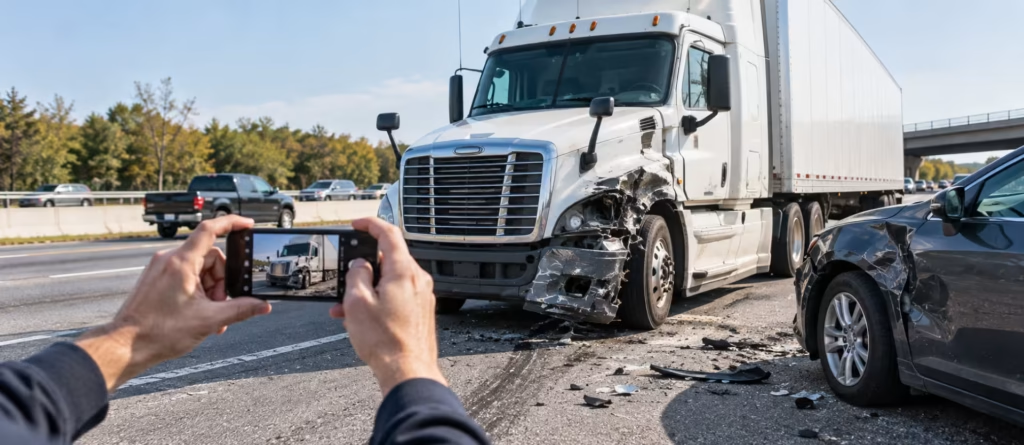
An 18-wheeler accident can leave victims with serious injuries, expensive medical bills, lost income, and uncertainty about who should be held responsible. Unlike an ordinary car crash, a collision involving a commercial truck may involve several parties, including the driver, trucking company, maintenance provider, or cargo-loading contractor.
Establishing fault requires more than showing that a crash occurred. A truck accident lawyer must connect the available evidence to the actions or failures that caused the collision. Understanding how to prove truck driver negligence and identify failures by a trucking company can make a significant difference when pursuing compensation.
Proving Negligence
To establish negligence, an injured person generally must show that the responsible party owed a duty of care, breached that duty, caused the accident, and resulting injuries led to damages.
In practice, how to prove negligence in a truck accident depends on the circumstances. A driver may have been speeding, driving while fatigued, or failing to pay attention. A trucking company may have ignored safety requirements, failed to maintain its vehicles, or allowed an unqualified driver to operate a commercial truck.
The central question is whether the evidence connects a specific act or failure to the crash and the resulting harm. This is the foundation of proving 18 wheeler accident negligence and establishing 18 wheeler accident liability.
Investigating the Crash
A thorough truck accident investigation helps establish what happened before, during, and after a collision. An attorney may gather photographs, surveillance footage, witness accounts, road conditions, vehicle damage, and official crash documentation.
The truck accident police report evidence can provide an initial account of the collision, including statements from drivers and witnesses, the responding officer’s observations, and any citations issued. However, a police report may not establish every relevant fact or conclusively determine civil liability.
Attorneys may also obtain truck accident witness statements from people who saw the collision or observed the truck shortly before impact. These accounts can help clarify vehicle movements, traffic conditions, and possible signs of unsafe driving.
When the cause remains disputed, a specialist may conduct a truck accident reconstruction. By examining physical evidence, vehicle damage, roadway measurements, and available electronic data, the specialist can help explain how the collision occurred.
Driver Negligence
Commercial truck drivers must operate their vehicles with reasonable care and follow applicable traffic and safety requirements. Evidence of truck driver negligence may show that a driver’s actions contributed to the crash.
Common examples include:
- Truck driver speeding accident: Driving too fast for traffic, weather, visibility, or road conditions can reduce stopping distance and increase the severity of a collision.
- Distracted truck driver accident: Using a phone, adjusting devices, or taking attention away from the road can prevent a driver from reacting in time.
- Truck driver fatigue accident: Drowsiness can slow reaction times and impair judgment, especially when a driver has not had sufficient rest.
- Unsafe lane changes, following too closely, or failing to yield.
- Driving under the influence of alcohol or drugs.
The evidence of truck driver negligence may include witness statements, dashcam footage, electronic records, phone records, citations, and the driver’s own statements. No single item necessarily proves fault on its own; the evidence must be assessed together.
Hours of Service
Federal hours-of-service rules limit driving time and require qualifying rest periods for many commercial drivers. Investigators may examine whether a driver exceeded applicable limits or failed to take required breaks.
In a truck hour of service violation accident, records may show that the driver spent too long behind the wheel or failed to comply with rest requirements. Relevant materials can include electronic logging device data, dispatch communications, trip schedules, fuel receipts, and delivery records.
An attorney may review ELD records truck accident investigators obtain to compare logged driving time with other evidence. A truck driver logbook accident review may also reveal inconsistencies between reported hours and the driver’s actual activities.
These records can help determine whether fatigue contributed to the collision. A violation alone does not automatically establish liability; the evidence must also support a connection between the conduct and the accident.
Electronic Evidence
Modern commercial trucks may contain electronic systems that record information about vehicle operation. This data can help investigators establish speed, braking, and other details surrounding a collision.
Truck black box evidence may provide information about vehicle performance immediately before or during impact, depending on the truck’s equipment and the data available. Reviewing truck accident black box data can help clarify whether the driver braked, how fast the truck was traveling, and how the vehicle responded.
Other electronic evidence may include GPS data, dashcam footage, onboard monitoring systems, and dispatch communications. Investigators may also seek truck driver cell phone records accident evidence when phone use is suspected, subject to applicable legal requirements.
Electronic records may be overwritten, lost, or become harder to obtain over time. Prompt action can therefore be important when preserving truck accident evidence.
Company Negligence
Responsibility may extend beyond the driver. Trucking company negligence can occur when a company fails to take reasonable steps to hire qualified drivers, maintain safe vehicles, enforce safety policies, or comply with applicable regulations.
Evidence may reveal broader safety failures rather than a single driver’s mistake. Depending on the facts, an attorney may investigate:
- Negligent hiring truck driver: Whether the company hired a driver without appropriate qualifications or overlooked relevant safety concerns.
- Negligent retention truck driver: Whether the company continued employing a driver despite known performance or safety problems.
- Negligent training truck driver: Whether inadequate instruction contributed to unsafe driving practices.
- Negligent supervision trucking company: Whether the company failed to monitor drivers or address known risks.
- Trucking company safety violations: Whether records reveal repeated failures to follow applicable safety requirements.
The evidence of trucking company negligence may include personnel files, driver qualification records, training documents, disciplinary history, safety audits, dispatch communications, and company policies.
A company is not automatically liable for every collision involving one of its trucks. Liability depends on the facts, the applicable law, and the relationship between the company and the driver. An attorney must identify the legal basis for holding the company responsible.
Maintenance Failures
A truck’s mechanical condition can be another important part of an investigation. Commercial vehicles require appropriate inspection, servicing, and repairs to remain safe on the road.
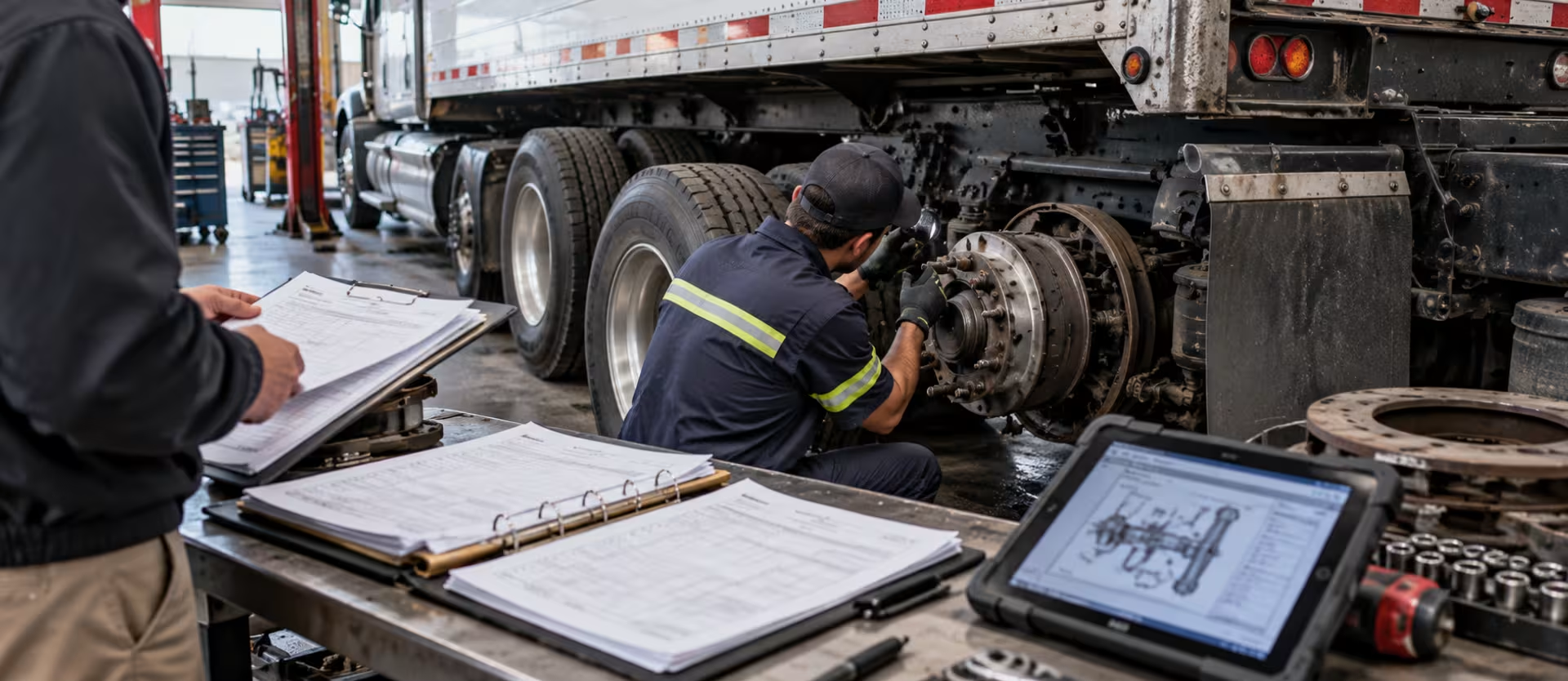
Truck maintenance negligence may involve missed inspections, ignored repair recommendations, defective replacement parts, or failure to address known mechanical problems. Investigators may request truck maintenance records accident documentation to determine whether a problem existed before the collision and whether it was reported or repaired.
They may also examine truck inspection records accident evidence, repair invoices, service histories, and driver defect reports. For example, a defective truck brakes accident may involve worn components, inadequate repairs, or a known braking problem that was not addressed. A truck tire failure accident may require examining tire condition, maintenance history, inflation, and possible defects.
Mechanical failure does not automatically mean the trucking company was negligent. The investigation must determine what failed, why it failed, who was responsible for addressing the issue, and whether the failure contributed to the crash.
Cargo Loading
Improperly loaded or unsecured freight can affect a truck’s stability, steering, and braking. Shifting cargo may cause a driver to lose control, while unsecured materials can fall onto the roadway and endanger other motorists.
In an improperly loaded truck accident, investigators may examine loading procedures, weight distribution, shipment documents, photographs, and the condition of the cargo after the crash.
A truck cargo securement violation may also be relevant when freight was not restrained properly or applicable securement requirements were not followed.
Depending on the circumstances, responsibility may involve the trucking company, driver, cargo loader, or another party involved in preparing the shipment. Evidence must establish which party had responsibility for the unsafe condition and whether it contributed to the collision.
Preserving Evidence
Important records can be lost if they are not requested promptly. An attorney may send a truck accident preservation letter to the trucking company and other relevant parties, asking them to preserve potentially important materials.
The letter may identify evidence such as electronic data, driver logs, inspection and maintenance records, dashcam footage, dispatch communications, and driver qualification files. Depending on the case, additional steps may be necessary to obtain records through formal legal procedures.
Early preservation matters because some electronic information is retained for limited periods, while vehicles may be repaired or returned to service. Acting quickly can help protect evidence needed to evaluate fault and damages.
Establishing Liability
Determining how to prove truck accident liability requires identifying each party’s role and linking its conduct to the collision. In some cases, the driver’s actions are the primary concern. In others, maintenance failures, company safety practices, or cargo-loading decisions may also be relevant.
An attorney may consult accident reconstruction specialists, mechanical experts, medical professionals, or other qualified experts to interpret complex evidence. These findings can help establish how to prove fault in a truck accident when the parties disagree about what happened.
The available evidence also helps assess the extent of the injuries, medical expenses, lost wages, reduced earning capacity, and other losses. Establishing who caused the collision and documenting the resulting damages are both important parts of a compensation claim.
Texas Truck Claims
In Texas, truck accident claims are subject to state negligence and proportionate-responsibility rules, along with applicable federal and state trucking regulations. The facts of the case determine which rules apply and how responsibility is assessed.
For cases involving truck driver negligence in Texas, evidence may involve violations of traffic laws or commercial-driver safety requirements. Similarly, evidence for trucking company negligence in Texas may involve hiring practices, vehicle maintenance, supervision, or other failures supported by the evidence.
When evaluating truck accident liability Texas, an 18-wheeler attorney considers the conduct of the driver and any other potentially responsible parties, the evidence linking that conduct to the crash, and the applicable legal standards. Texas proportionate-responsibility rules may affect recovery when a claimant is found partly responsible, so the circumstances must be carefully assessed.
A truck accident claim may involve substantial losses and several sources of evidence. A Texas truck accident attorney usually reviews the available records, explains the legal process, and determines what additional evidence may be needed. Where the facts support it, the attorney can also evaluate potential claims involving the driver, trucking company, or other responsible parties.
Building a Strong Claim
Proving negligence in an 18-wheeler accident requires clear evidence of what went wrong and how it contributed to the crash. Driver records, maintenance history, electronic data, and company safety documents can all help establish responsibility. The Wright Law Office works with injured individuals to evaluate the circumstances of a truck accident, identify potentially responsible parties, and understand their legal options for pursuing compensation. Preserving relevant evidence early can be an important step toward building a strong claim.