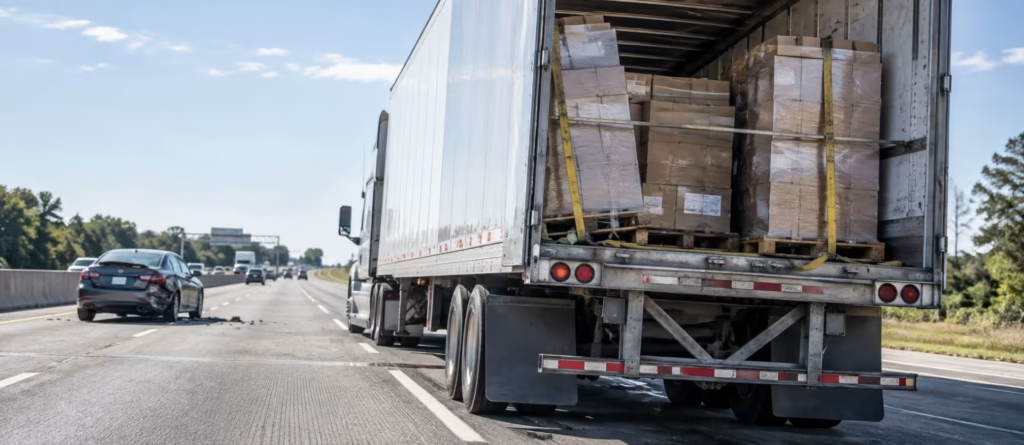
A fully loaded commercial truck can weigh many times more than a passenger vehicle. When its brakes fail or a tire suddenly blows out, the driver may have little time to respond, and nearby motorists can be placed in serious danger.
A truck brake failure accident or tire-related crash may not simply be an unavoidable mechanical failure. Depending on what caused the problem, responsibility may involve the truck driver, trucking company, maintenance provider, parts manufacturer, or another party.
Federal regulations require motor carriers to systematically inspect, repair, and maintain commercial vehicles under their control. Commercial vehicles also must undergo periodic inspections at least once every 12 months.
Understanding what caused the failure is therefore an important part of determining whether someone may be legally responsible for the resulting injuries and losses.
What Happens If Truck Brakes Fail?
When truck brakes stop working properly, the consequences can be severe. A commercial truck may need significantly more distance to stop, particularly when traveling at highway speeds or carrying a heavy load.
So, what happens if a truck’s brakes fail while the vehicle is moving? The truck may:
- Take substantially longer to stop
- Continue moving despite the driver applying the brakes
- Lose braking power on one or more wheels
- Pull or swerve unexpectedly
- Strike vehicles stopped ahead
- Roll through intersections
- Collide with roadside objects
- Cause a chain-reaction crash
A truck brakes failed accident can occur because of worn brake components, air-pressure problems, brake adjustment issues, damaged hoses, inadequate maintenance, or other mechanical problems.
Federal motor carrier regulations require vehicles and their parts and accessories to be maintained in safe and proper operating condition. Federal inspection standards also address defective and inoperative brakes, brake hoses, brake linings, and related components.
Common Causes of Truck Brake Failure
Not every brake failure has the same cause. An investigation may identify one or more of the following:
- Worn or damaged brake pads or linings
- Improperly adjusted brakes
- Air leaks or pressure loss
- Damaged brake hoses or tubing
- Defective brake components
- Inadequate inspection
- Delayed repairs
- Improper brake servicing
- Overheating or excessive brake wear
- Failure to address a known mechanical problem
A semi truck brake failure can be particularly dangerous because tractor-trailer combinations rely on interconnected braking systems across multiple axles.
The same is true of an 18 wheeler brake failure. If a critical component fails, the resulting loss of stopping ability can create a serious collision involving multiple vehicles.
What Happens in a Truck Tire Blowout Accident?
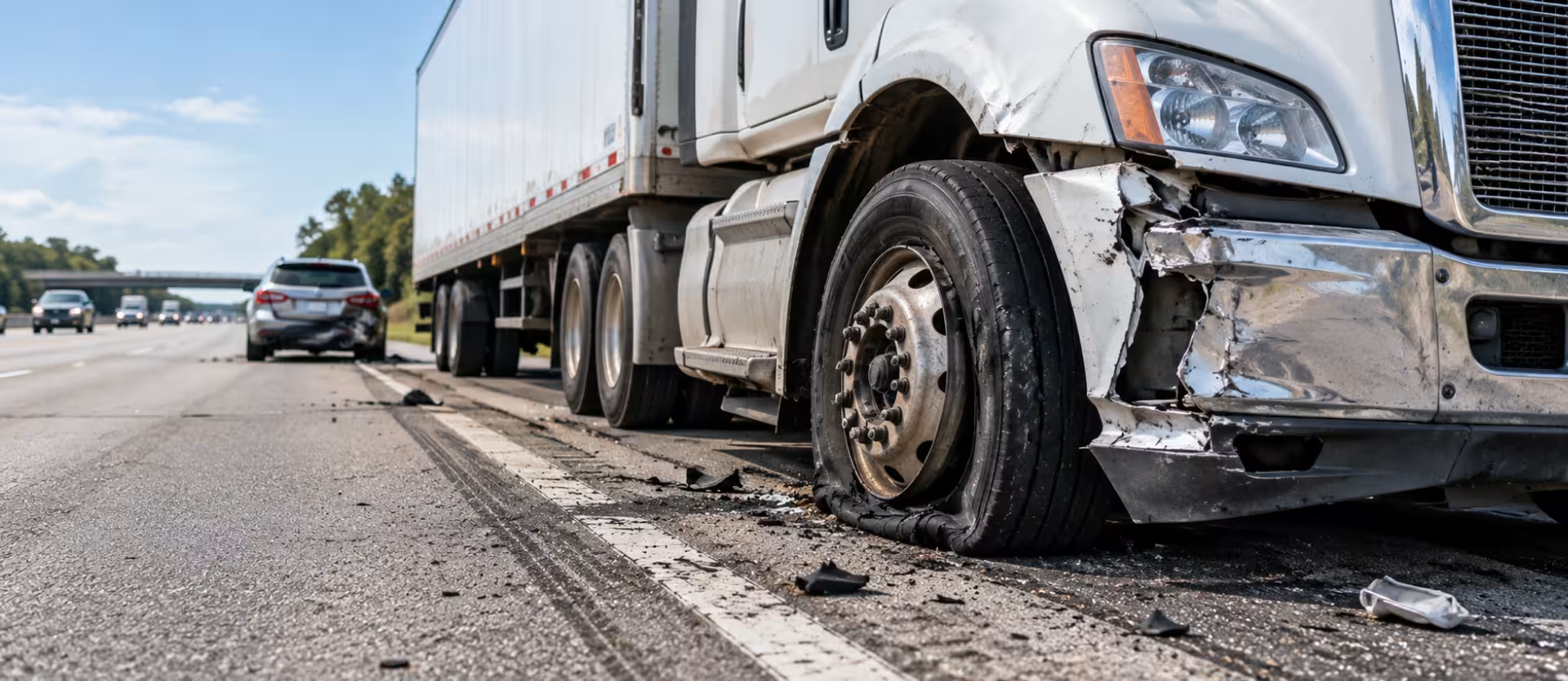
Tires are another critical safety component on commercial trucks. A sudden tire failure can cause the truck to become difficult to control and may send tire debris into surrounding lanes.
A truck tire blowout accident may happen when a tire suddenly loses pressure or experiences structural failure. The driver may attempt to maintain control, but a blowout can cause the vehicle to pull to one side, become unstable, or collide with another vehicle.
A truck tire failure accident may involve:
- Sudden loss of tire pressure
- Tread separation
- Sidewall damage
- Tire debris on the roadway
- Loss of steering or stability
- A trailer becoming difficult to control
- A rollover
- A collision with nearby vehicles
A tire blowout truck accident can also create secondary crashes when other motorists encounter debris or an uncontrolled truck.
Federal standards address commercial vehicle tire conditions, including exposed tire material, tread depth, tire leaks, tread or sidewall separation, and other defects. For example, the federal standards generally require at least 4/32-inch tread depth for front tires and 2/32 inch for other tires, measured in specified tread areas.
Common Causes of Truck Tire Failure
A tire does not necessarily fail without warning. Depending on the circumstances, an investigation may uncover:
- Excessive tire wear
- Underinflation
- Overloading
- Tread separation
- Sidewall damage
- Improper tire installation
- Defective tires
- Failure to replace worn tires
- Improper tire maintenance
- Failure to identify an existing defect
A truck tire blowout accident may therefore raise questions about how the tire was selected, inspected, maintained, and used before the crash.
Could a Mechanical Failure Make the Truck Driver Liable?
A mechanical problem does not automatically mean the truck driver is responsible. The circumstances matter.
For example, if a driver knew that the brakes were malfunctioning but continued driving, the driver’s conduct could become relevant to determining liability. Federal rules require drivers to report certain safety-related defects identified during inspections, and motor carriers have obligations concerning repairs before requiring or permitting operation when listed defects are likely to affect safe operation.
This means truck driver liability in case of brake failure may depend on questions such as:
- Did the driver know about the brake problem?
- Did the driver report the problem?
- Was the truck driven despite a known safety defect?
- Did the driver conduct required inspections?
- Did the driver respond appropriately when the failure occurred?
- Could the driver reasonably have detected the problem before the crash?
The same principle can apply to tires. If a driver knowingly operated a truck with dangerously worn or damaged tires, that conduct could become relevant to determining responsibility.
Is the Trucking Company Responsible?
The trucking company may also become part of the investigation.
Federal regulations require motor carriers to systematically inspect, repair, and maintain commercial motor vehicles under their control. Required maintenance and inspection records can also provide evidence about the vehicle’s condition before a collision.
This is why trucking company liability for mechanical failure can be an important issue after a serious crash.
Potential questions include:
- Was the truck properly maintained?
- Were previous defects documented?
- Were recommended repairs completed?
- Were inspections performed?
- Did the company know about the problem?
- Was the truck placed back into service despite a safety concern?
- Were maintenance schedules followed?
- Did the company use qualified personnel for brake inspections and repairs?
A claim involving trucking company negligence for truck maintenance may therefore require more than examining the truck after the accident. Investigators may need to reconstruct the vehicle’s maintenance history.
When Does Truck Maintenance Failure Become Negligence?
A truck maintenance failure accident may involve negligence when a party responsible for maintaining the vehicle fails to take reasonable steps to identify or correct a dangerous condition.
For example, a recurring brake defect documented in earlier inspections could raise different questions than a sudden failure caused by an unforeseeable component defect. Similarly, evidence of repeatedly ignored tire problems may be relevant to a truck maintenance negligence accident claim.
The distinction matters because mechanical failure alone does not automatically establish legal liability. An investigation generally needs to determine:
- What failed?
- Why did it fail?
- Who was responsible for inspecting or maintaining it?
- Was the problem detectable?
- Was the problem previously reported?
- Were repairs performed?
- Did the failure cause or contribute to the collision?
- What injuries and losses resulted?
Could a Defective Part Cause the Crash?
Sometimes the trucking company and driver are not the only parties who need to be examined.
A defective component may cause a crash even when the vehicle was otherwise properly maintained.
For example, a defect involving a brake component or tire could potentially result in a defective truck part accident. Texas law recognizes products-liability claims involving defective products that cause personal injury, death, or property damage, and defines manufacturers and sellers for purposes of those claims.
Potentially relevant parties could include:
- The truck manufacturer
- A component manufacturer
- A tire manufacturer
- A parts supplier
- A distributor
- A repair or maintenance company
A truck manufacturer liability accident may therefore involve a different legal analysis than a crash caused by poor maintenance.
Defective Brakes vs. Poor Maintenance
These situations can look similar but involve different questions.
Defective truck brakes accident:
The brake component itself may have been defective.
Faulty truck brakes accident:
A brake component or system may have malfunctioned, requiring an investigation into why.
Truck accident caused by defective brakes:
Evidence may need to establish that the defect existed and that it caused or contributed to the crash.
The same distinction applies to tires:
Defective truck tires accident:
The tire itself may have contained a manufacturing, design, or other defect.
Faulty truck tires accident:
The tire may have failed because of a defect or another mechanical or maintenance issue.
A truck accident caused by tire blowout may therefore require examination of both the tire and the circumstances surrounding its use.
Who Is Liable for a Truck Brake Failure Accident?
People often ask, who is liable for truck brake failure accident. There is no automatic answer. Liability depends on the facts and evidence.
Potentially responsible parties may include:
- The truck driver
- The trucking company
- A maintenance or repair company
- A parts manufacturer
- A parts distributor
- Another party whose conduct contributed to the failure
For example, if a trucking company failed to address a documented brake problem, the maintenance history could become important. If a newly installed component failed because of a manufacturing defect, the analysis may be different.
The key issue is identifying the cause of the failure and connecting that failure to the collision and resulting damages.
Who Is Liable for a Truck Tire Blowout Accident?
The same question arises in tire cases: who is liable for truck tire blowout accident claims?
Potential responsibility may depend on whether the blowout resulted from:
- Worn tires
- Improper inflation
- Overloading
- Failure to inspect the tire
- Improper installation
- A maintenance problem
- A manufacturing defect
- A road hazard
- Another cause
Determining responsibility may require examining the tire itself, maintenance records, inspection records, purchase information, repair records, photographs, and other evidence.
Evidence That May Matter After a Truck Mechanical Failure Crash
Mechanical-failure cases can depend heavily on evidence that may not remain available indefinitely.
Important evidence may include:
Truck Brake Maintenance Records
Truck brake maintenance records may show when the brakes were inspected, repaired, adjusted, or replaced.
They may also help establish whether previous problems were identified.
Truck Tire Maintenance Records
Truck tire maintenance records can provide information about tire replacement, inspections, inflation, repairs, and other work performed before the crash.
Truck Inspection Records
Truck inspection records accident investigations may help determine whether safety defects were documented before the collision.
Federal rules require commercial motor carriers to maintain certain inspection and maintenance documentation, including periodic inspection reports. Annual inspection reports generally must be retained for 14 months.
Truck Maintenance Records
Truck maintenance records as accident evidence can be especially important when the alleged mechanical problem developed over time.
Other potentially important evidence may include:
- Electronic logging data
- Driver vehicle inspection reports
- Repair invoices
- Work orders
- Parts invoices
- Tire purchase records
- Photographs of the truck
- Dashcam footage
- Surveillance video
- Black-box or event-data information when available
- Police reports
- Accident reconstruction evidence
- Witness statements
- The failed brake or tire components
Preserving the physical evidence can be particularly important. A damaged tire, brake component, or other part may help investigators determine what actually failed.
What Happens After a Truck Brake or Tire Failure Accident?
After a serious crash, several investigations may take place at the same time.
Law enforcement may investigate the collision. Insurance companies may begin their own investigation. The trucking company or its insurer may inspect the vehicle and its records.
An injured person may also need to determine whether evidence exists showing that the truck had a maintenance or equipment problem before the crash.
A truck equipment failure accident can therefore become more complicated than a typical two-vehicle collision.
The investigation may need to establish:
Mechanical problem → cause of failure → responsible party → crash → injuries → financial losses
Each part of that chain can matter.
What Damages May Be Available?
If another party is legally responsible for the collision, an injured person may potentially seek compensation for losses supported by the evidence and applicable law.
Depending on the circumstances, damages may include:
- Emergency medical treatment
- Hospital bills
- Follow-up medical care
- Rehabilitation
- Prescription expenses
- Lost income
- Reduced earning capacity
- Property damage
- Physical pain
- Emotional distress
- Other legally recoverable losses
The specific damages available depend on the facts of the case, applicable law, and evidence establishing the losses.
Who Is Responsible for Truck Brake Failure?
The answer to who is responsible for truck brake failure depends on what the investigation establishes.
A driver may potentially be responsible for conduct such as knowingly operating an unsafe vehicle. A trucking company may potentially face liability when inadequate inspection, maintenance, repair, or supervision contributed to the crash. A maintenance provider may become relevant if negligent repair caused the failure. A manufacturer or seller may potentially be involved when a defective component caused the accident.
In some cases, more than one party may have contributed to the collision. That is why identifying the failed component is only the beginning of a mechanical-failure investigation.
When Should You Speak With a Truck Accident Lawyer?
A serious mechanical failure can create a complicated liability investigation. If you were injured in a crash involving failed brakes, a tire blowout, or another equipment problem, obtaining legal guidance can help you understand what evidence may matter.
A truck brake failure lawyer can investigate issues such as maintenance history, prior defects, inspection records, and the condition of the braking system. The lawyer may also examine whether the failure involved negligent maintenance, defective components, or another cause.
For broader truck collision claims, a truck accident lawyer can investigate the circumstances of the crash and identify potentially responsible parties.
For crashes involving tractor-trailers, an 18 wheeler accident lawyer may also examine the carrier’s safety practices, maintenance history, driver records, and vehicle inspection evidence.
Final Thoughts
A failed brake or blown tire can turn a routine trip into a serious collision in seconds. But a mechanical failure does not necessarily mean that the crash was unavoidable. The circumstances leading up to the failure matter.
Maintenance history, inspection records, repair documents, driver reports, defective components, and physical evidence can help determine whether the problem resulted from ordinary wear, negligent maintenance, a defective part, driver conduct, or another cause.
If you or a family member was injured in a Texas truck crash involving brake failure, tire failure, or another mechanical problem, obtaining legal advice from a trusted 18-wheeler accident lawyer early can help protect important evidence and clarify what claims may be available.